
Falah Welfare Network
A comprehensive digital platform designed to support community welfare initiatives, streamline donations, and expand organizational reach.
Visit Live Site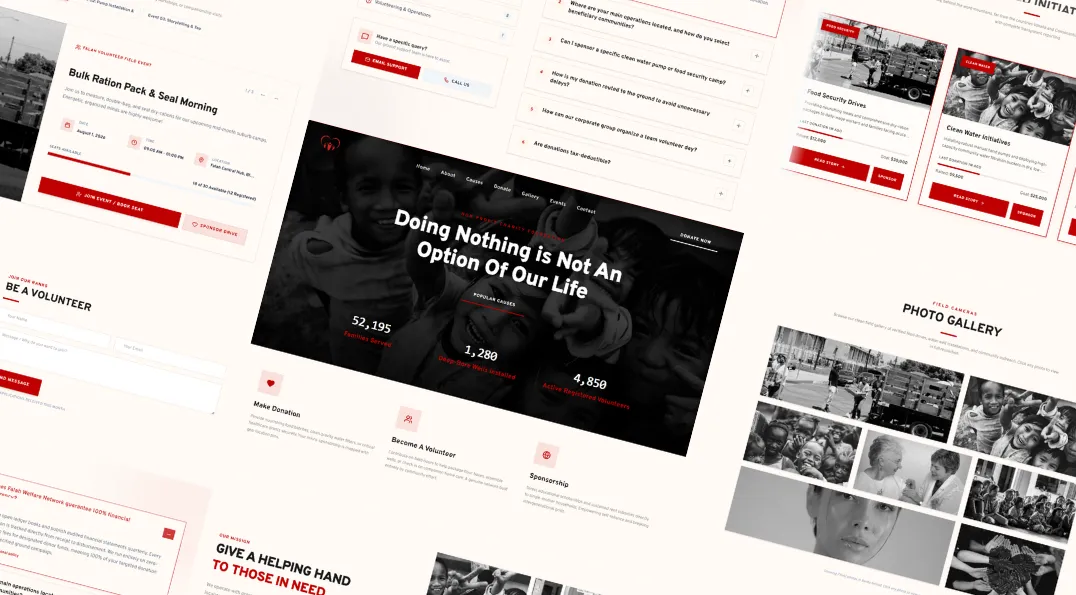
01. The Falah Welfare Network Platform
Falah Welfare Network is a women-led welfare organization energized by a growing Gen Z volunteer network. Its humanitarian initiatives respond to practical community needs through direct service, support, visits, and collective action.
1.1 The Community-Centered Digital Model
The website operates as a central information and participation platform. Rather than relying on social media as the organization’s permanent home, it brings the mission, initiatives, updates, donation information, volunteer onboarding, events, and contact options into one structured experience.
1.2 The Trust and Credibility Framework
Trust is built through evidence. Each initiative should be supported by specific stories, photographs, dates, updates, and clear descriptions of what happened, who was involved, and what the activity meant to the community.
1.3 The Unified Visitor Experience
The website should connect awareness with action. A first-time visitor can understand the organization quickly, explore current work, and reach the next step, whether that means donating, volunteering, registering for an event, asking a question, or staying connected.
02. Core Website Architecture & Capabilities
The Falah Welfare Network website comprises several content and participation areas working together. Each area is designed to reduce uncertainty and make the organization’s work easier to revisit and support.
2.1 Mission and Organization Introduction
The homepage and About section explain why Falah Welfare Network exists, who it serves, how it is led, and what kind of humanitarian work it undertakes. The content should feel warm and human without becoming vague or sentimental.
2.2 Initiative Documentation System
Initiatives should be presented through structured updates rather than broad claims. Each story can include the area of work, activity date, location where appropriate, people involved, images, and a concise account of the community need being addressed.
2.3 Volunteer and Participation Pathways
The website should make it easy for people to understand how they can help. Volunteer registration, event participation, donation information, inquiries, and connection options should be clearly visible at relevant points throughout the experience.
2.4 Events, Galleries and Community Stories
Events and galleries provide continuity. They show that the organization is active, give supporters a reason to return, and create a record of the people and initiatives shaping Falah Welfare Network’s journey.
2.5 Maintainable Content Structure
The platform should be organized so the team can update initiatives, events, galleries, FAQs, contact information, and key pages without unnecessary technical friction or content clutter.
03. The Community Value Proposition
For someone discovering a welfare organization for the first time, the main questions are practical: What does this organization do? Is the work real? Who does it help? How can I participate?
- Faster Understanding: A clear mission, focused homepage, and structured initiative pages allow visitors to understand Falah Welfare Network without searching through multiple social platforms or older posts.
- Stronger Trust Through Evidence: Current updates, real photographs, specific stories, and transparent information help the audience see an active organization rather than a collection of general promises.
- More Direct Participation: Visitors can move from interest to action through clear routes for donating, volunteering, registering for events, submitting an inquiry, or staying connected.
- A More Human Digital Experience: The website reflects the balance at the heart of Falah Welfare Network: women-led care and responsibility combined with the creativity, collaboration, and digital fluency of Gen Z volunteers.
04. The Work In Focus: Humanitarian Initiatives
Falah Welfare Network’s initiatives are practical, visible, and close to everyday community needs. The website should present each area through specific work and current evidence.
- Food drives: Organized support responding to immediate household needs with dignity and care.
- Water drives: Community-focused efforts addressing access to an essential resource.
- Family support: Practical assistance recognizing the wider needs of families, not just one moment of crisis.
- Old-age home visits: Time, attention, and companionship for older people who may be isolated.
- Orphanage visits: Service and engagement that bring care, presence, and meaningful interaction.
- Community welfare: Additional initiatives responding to local needs as they emerge.
05. The Organizational Case: Why The Website Matters
Social platforms are useful for awareness and quick updates, but they are not a permanent, structured home for an organization’s full story. The website addresses this limitation directly.
- Consolidating Scattered Information: Mission details, volunteer onboarding, donation information, event details, and longer-form stories can be brought together in one place that is easy to revisit and share.
- Supporting Future Growth: A dedicated platform gives Falah Welfare Network room to develop more initiatives, stories, partnerships, events, and supporter relationships without becoming dependent on the limits of a social feed.
- Building Continuity and Institutional Memory: Regularly maintained updates, galleries, and community stories document the organization’s journey. The website becomes an evolving record of the work rather than a static launch page.
06. The Success Framework
The project succeeds when the website helps people understand, trust, and participate.
- Understanding: A first-time visitor can explain what Falah Welfare Network does and who it serves.
- Trust: The organization feels active, honest, and credible because the site shows real work and current information.
- Participation: Visitors can donate, volunteer, register for events, or submit an inquiry without confusion.
- Continuity: The website documents the organization’s journey rather than becoming a static launch page.
- Maintainability: The team can keep updates, events, galleries, and key content current without unnecessary technical friction.